
On this page
Aerobic digestion is the breakdown of organic waste by bacteria that need oxygen. In wastewater treatment, air is mixed into the water so aerobic bacteria can consume the organic matter and convert it into carbon dioxide, water and new bacterial cells. The result is less sludge, fewer odors and cleaner water leaving the system.
This guide explains how aerobic digestion works, how it differs from anaerobic digestion, what an aerobic digester is, and how ClearBlu builds a complete aerobic treatment system.
Key takeaways
- Aerobic digestion uses oxygen and bacteria to turn organic waste into carbon dioxide, water and new cells.
- Anaerobic digestion works without oxygen and produces biogas that is 50 to 75 percent methane.
- For sewage sludge, federal rules define aerobic digestion as 40 days at 20°C to 60 days at 15°C.
- A ClearBlu aerobic treatment system reaches a BOD reduction of 98% or more.
How does aerobic digestion work?
Aerobic digestion works by keeping wastewater supplied with oxygen so that aerobic bacteria stay active. It runs in four steps.
- Oxygen is added. Aerators or diffusers mix air into the water.
- Bacteria feed. Aerobic bacteria consume the dissolved organic matter, which is measured as biochemical oxygen demand, or BOD.
- Waste is converted. The bacteria turn that organic matter into carbon dioxide, water and new cells.
- Solids are reduced. With enough time and oxygen, the volume of sludge falls and what remains is more stable.
The term also has a specific regulatory meaning. Under federal biosolids rules, aerobic digestion of sewage sludge means agitating it with air or oxygen for 40 days at 20°C to 60 days at 15°C. Industrial wastewater systems are designed to their own flow and discharge targets, so treatment times vary.
What is the difference between aerobic and anaerobic digestion?
The difference is oxygen. Aerobic digestion needs it, and anaerobic digestion happens without it. That changes what each process produces.
| Aerobic digestion | Anaerobic digestion | |
|---|---|---|
| Oxygen | Required. Air or oxygen is mixed in | Absent |
| Main products | Carbon dioxide, water and new bacterial cells | Biogas and digestate |
| Gas produced | Carbon dioxide | Biogas that is 50 to 75% methane, with carbon dioxide and hydrogen sulfide |
| Energy | Uses energy for aeration | Produces biogas that can be used for heat or electricity |
| Time required | 40 days at 20°C to 60 days at 15°C | 15 days at 35 to 55°C to 60 days at 20°C |
Anaerobic digestion suits operations that can put the biogas to use. The U.S. EPA notes that biogas can be used like natural gas for heat and electricity. Aerobic digestion produces fewer odors and leaves no biogas to manage.
What is an aerobic digester?
An aerobic digester is the tank, basin or pond where aerobic digestion takes place. It holds the wastewater or sludge, supplies oxygen and keeps the contents mixed so the bacteria stay in contact with their food.
ClearBlu’s version is the Updraft Biodigester. It circulates wastewater through a honeycomb media pack that gives bacteria thousands of square feet of surface to grow on. ClearBlu reports that this makes the bacteria 60% more efficient.
Who uses aerobic digestion?
Aerobic digestion is used wherever wastewater carries a heavy organic load. ClearBlu builds aerobic systems for breweries, wineries, food processors and municipalities.
Why choose aerobic digestion?
Aerobic digestion is an environmentally friendly and effective method for wastewater treatment. By significantly reducing sludge volume and producing a more stable byproduct, this process helps facilities meet environmental regulations while minimizing their impact on the ecosystem.
Key benefits
In a ClearBlu system, the screen spray bars use 90% less water than rotary drum screens, the pH system uses 30% less chemical than a standard pH system, and the full process reaches a BOD reduction of 98% or more.
- Efficient Waste Reduction: Significantly reduces the volume of organic waste.
- Odor Control: Produces fewer odors compared to anaerobic processes.
- Sustainability: Stabilized sludge can be safely disposed of or repurposed.
- Low Maintenance: With remote monitoring and higher efficiency, it requires far less maintenance.
How ClearBlu builds an aerobic treatment system
ClearBlu’s complete wastewater treatment has six steps. These can be customized to fit the specific needs of your business. Contact us if you’re interested in a free consultation.
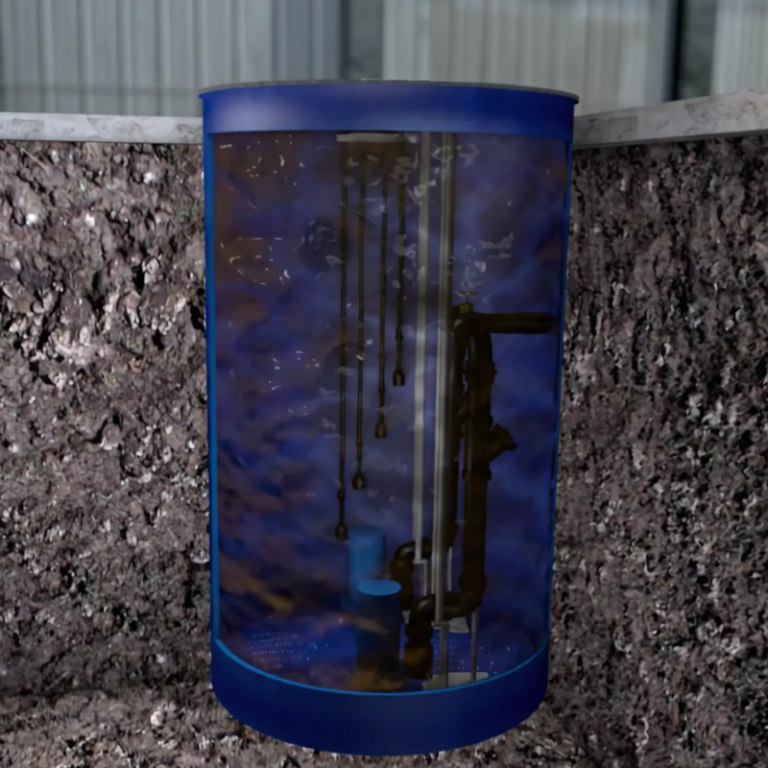
- Lift Station + Wedgewire Screen First, we install a circular lift station to move your wastewater to the first stage of treatment. These lift stations are self-cleaning and fully automated and can handle high-temperature wastewater. We build our own stainless-steel wedge wire waterfall screens, with self-cleaning spray bars. These spray bars use 90% less water than rotary drum screens. These screens can separate material as small as .5 millimeters.
- pH Balancing System Once screened, the water flows into a pH balancing system built by ClearBlu. This automatic system senses the initial pH level and checks that against the system’s set parameters. With rapid mixing utilizing stainless steel eductor technology, these pH systems use 30% less chemicals than normal pH adjusting systems.
- Solids Screw Press The next stage is utilizing a screw press. This optional piece of equipment is ideal for the removal of 95% of fine solids and can remove up to 20% of BOD.
- High Strength Bacteria Then, to accelerate the treatment process, the automatic dosing system adds high-strength bacteria. Bacteria targeted at your specific waste stream greatly accelerate the digestion process and will accommodate changes in flow and strength.
- Biodigestion + Nanobubble Aeration The next stage is our unique, continuous flow Updraft Aerobic Digestion, utilizing Nanobubble technology. Wastewater is circulated through a dense media pack, with a volume multiplying mixing system. This is the ClearBlu Updraft Biodigester system. The bacteria are 60% more efficient because they have thousands of square feet of “fixed film” surface with this molded polypropylene honeycomb media.
Nanobubbles, which are not buoyant, are injected through the mixing system. These Nanobubbles provide an exponentially larger surface area per cubic foot of air than conventional fine or coarse bubbles by injecting over a billion bubbles per milliliter. The continuous flow creates a completely aerobic environment, as well as complete digestion. - Ultrasonic Flow Detection ClearBlu’s flume and ultrasonic flow detection monitor and control the final stage flow, and telemetry systems can be used for remote monitoring. This energy-efficient process will help you attain a 98 percent or more reduction in BOD. And that’s not all, some other great advantages of our aerobic digestion treatment include no odor, low maintenance, and reduced capital costs.
Case Studies
Still unsure? We’ve done it before, many times across many industries.
Daou Vineyard & Wineries
We assisted by providing a package treatment system including lift stations, solids screening, pH balancing, and aerobic digestion.
Worthy Brewing Company
We implemented a pre-treatment system, which includes solids screening, settling, and automatic pH balancing.
FAQs
What is aerobic digestion in simple terms?
Aerobic digestion is bacteria using oxygen to consume organic waste. They turn it into carbon dioxide, water and more bacteria, which leaves less sludge and cleaner water.
Is aerobic or anaerobic digestion better?
Neither is better everywhere. Aerobic digestion produces fewer odors and no biogas, but it uses energy for aeration. Anaerobic digestion produces biogas that can be used for heat or electricity.
How long does aerobic digestion take?
For sewage sludge, federal rules set 40 days at 20°C to 60 days at 15°C. Industrial wastewater systems are sized for their own flow and strength, so the time depends on the design.
What does an aerobic digester do?
An aerobic digester holds wastewater or sludge, adds oxygen and keeps it mixed so aerobic bacteria can break down the organic matter.
How much BOD does aerobic digestion remove?
It depends on the system. ClearBlu’s aerobic treatment process is built to reach a BOD reduction of 98% or more.
Sources